Amplifier topology
Different amplifier technologies approach power delivery, efficiency and thermal management in different ways.
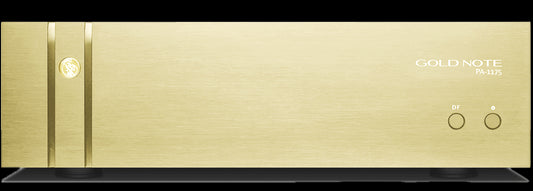
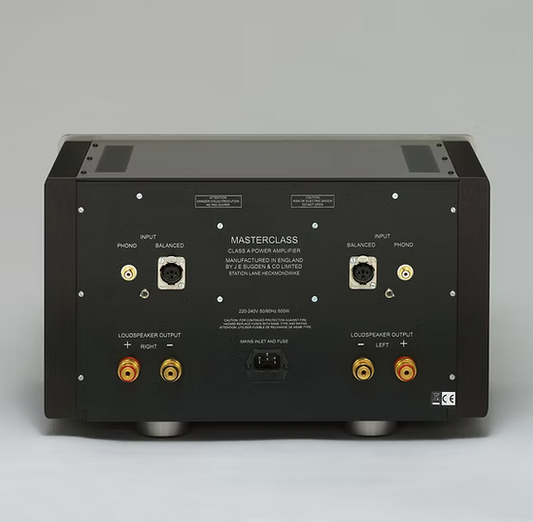
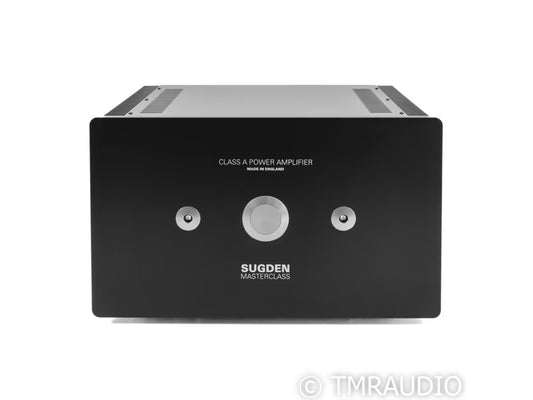
Class A — Operates its output stage continuously and is traditionally associated with highly linear amplification. Class A designs are generally less efficient and produce considerably more heat, but remain a deliberate choice in many high-end analogue amplifiers.
Class AB — Combines elements of Class A and Class B operation and is one of the most established approaches to high-quality power amplification. It offers a practical balance between linearity, power capability and efficiency.
Class D — Uses high-frequency switching amplification to achieve high efficiency and substantial power from relatively compact designs. Modern Class D implementations can offer extremely high performance and are used in both Hi-Fi and demanding multichannel systems.
Digital / Equibit — A specialised digital amplification architecture in which signal processing and amplification are more closely integrated than in conventional analogue amplifier designs.
Channel configuration
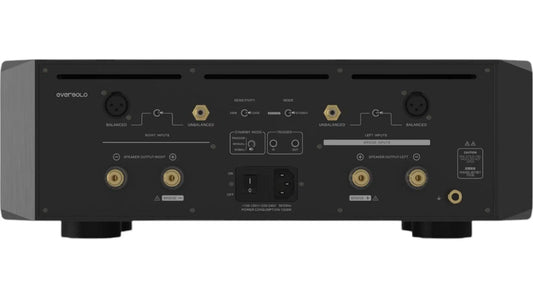
Mono — A monoblock amplifier powers a single channel. A pair is therefore required for a conventional stereo system. This approach allows completely separate amplification for the left and right speakers and is often used in high-performance systems.
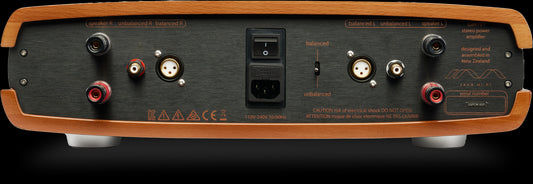
Stereo — Two amplification channels in one chassis, making it the conventional choice for a two-channel Hi-Fi system when used with a separate preamplifier.
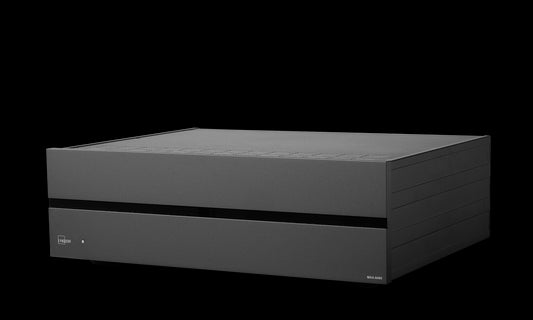
Multichannel — Provides amplification for several speakers from a single chassis and is particularly useful for home cinema, active speaker configurations and systems requiring multiple amplification channels.
Bridgeable amplifiers
Some amplifiers allow two channels to be combined in bridged or mono operation to provide substantially greater output to a single speaker. This can offer additional system flexibility, particularly when moving from a stereo configuration to separate high-power amplification.
Bridging does not automatically make an amplifier a better match for every speaker. The resulting power, minimum supported impedance and manufacturer recommendations should always be considered before using an amplifier in bridged mode.
Matching the amplifier to your speakers
Quoted wattage alone does not determine amplifier suitability. Speaker sensitivity, nominal and minimum impedance, listening distance and room size all affect the amount of power and current capability required.
Efficient speakers may achieve realistic listening levels with relatively modest amplification, while difficult impedance loads, larger rooms or higher listening levels can benefit from an amplifier with greater power and current reserves.
The preamplifier should also be considered as part of the system. Connection type, output level and balanced or unbalanced connectivity can all influence the practical compatibility between components.
Finding the right configuration
Use the Amplifier topology, Channels and Bridgeable filters to narrow the selection according to your system architecture. These specifications provide useful starting points, but the best choice ultimately depends on the speakers being driven, the room and the rest of the system.